
A lost master key can turn into a full-day problem. Rekeying doors, tracking down copies, updating staff, and wondering who still has access is expensive and disruptive. That is why the question of access control vs traditional keys comes up so often for homeowners, property managers, and business owners who want stronger protection without adding daily friction.
The short answer is that access control gives you more visibility, more control, and faster changes. Traditional keys still have a place in some settings because they are simple and familiar. The better choice depends on how often access needs change, how many doors you manage, and how much accountability matters to your property.
Access control vs traditional keys: what changes day to day?
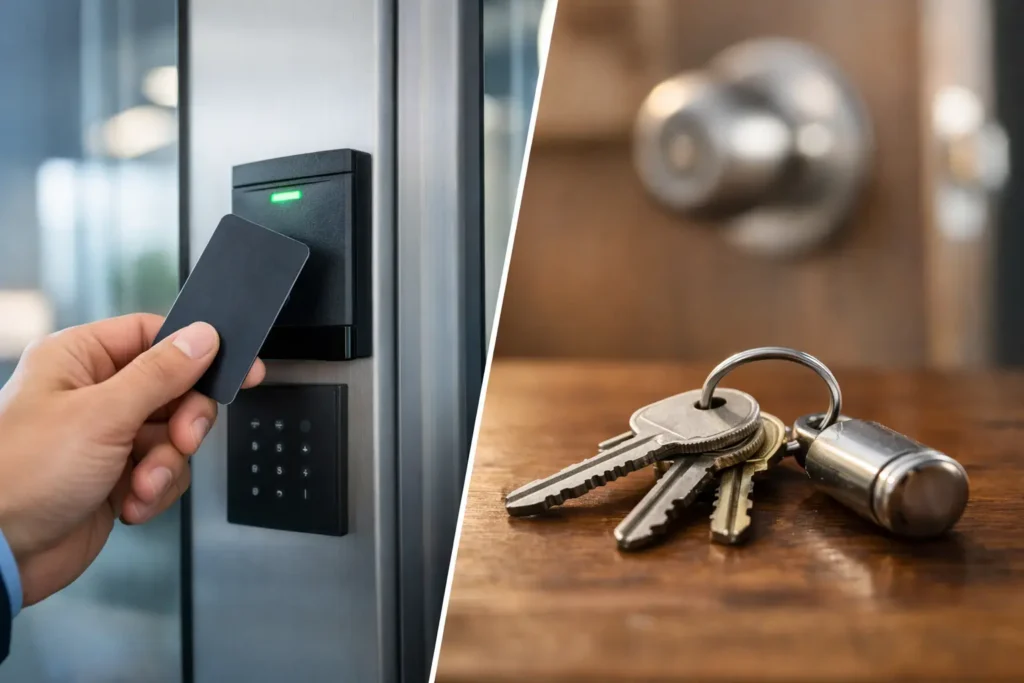
Traditional keys do one job. If the key fits, the door opens. That simplicity is part of the appeal. There is no app to learn, no software to manage, and no credential database to update. For a single-family home with one or two trusted users and low traffic, a standard lock and key setup can still be practical.
Access control changes the way entry is managed. Instead of handing out physical keys, you assign permissions through cards, fobs, PINs, mobile credentials, or biometric readers depending on the system design. You can decide who gets in, which door they can use, and at what times. That matters in offices, retail stores, warehouses, multifamily buildings, and even larger homes with service staff, deliveries, or detached structures.
The biggest day-to-day difference is not just convenience. It is accountability. With a key, you usually do not know who entered or when. With access control, entry events can be tracked. That creates a record that helps with security reviews, internal investigations, and general peace of mind.
Where traditional keys still make sense
There is a reason keys have lasted this long. They are inexpensive at the start, easy to understand, and not dependent on power or network connectivity. For a small detached garage, a storage room with very limited access, or a low-risk interior door, a traditional key can be enough.
Keys also work well when access rarely changes. If the same two people use the same door every day for years, the management advantage of electronic access may be less urgent. In those cases, the decision often comes down to whether you want future flexibility now or prefer to keep the setup as basic as possible.
That said, the simplicity of keys starts to work against you as soon as more people, more doors, or more turnover enters the picture. The more copies in circulation, the harder it is to know who still has one. If an employee leaves, a contractor finishes a job, or a tenant moves out, replacing a credential in an access system is usually far easier than replacing the physical security of a building.
Security is not just about the lock
When people compare access control vs traditional keys, they often focus on the door hardware itself. The real issue is what happens after something changes.
If a key is lost or not returned, you have a decision to make. Do you accept the risk and hope it never gets used, or do you rekey the lock and replace keys for everyone who needs access? On one door, that may be manageable. Across multiple suites, offices, exterior entries, and restricted areas, it becomes a recurring cost.
Access control handles that situation differently. If a card, fob, or phone credential is lost, access can be revoked without changing the lock. That speed matters. It reduces the window of exposure and removes the administrative mess of collecting and replacing keys.
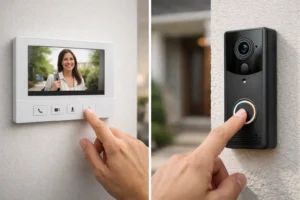
Access control also supports layered security. You can restrict after-hours entry, limit access to sensitive rooms, require schedules, and combine entry systems with cameras, alarms, and intercoms. A key cannot do that. It either opens the door or it does not.
This does not mean every electronic system is automatically more secure. Poor system design, weak credential practices, or neglected maintenance can create problems too. The advantage comes from professional planning, quality equipment, and support that keeps the system working as intended.
Cost: upfront price vs long-term control
Traditional keys usually win the first-price comparison. A mechanical lock is cheaper to buy and install than a full electronic access system. If you only compare hardware on day one, keys look like the budget option.
Over time, the math can shift. Rekeying, replacing hardware after turnover, dealing with unauthorized copies, and managing multiple doors manually all carry costs. Those costs are not always obvious because they show up as service calls, downtime, staff time, or avoidable risk rather than one clean invoice.
Access control requires a larger initial investment, especially when you include readers, controllers, power supplies, credentials, and professional installation. But it can reduce operating headaches. Adding or removing users is faster. Audit trails are available. Permissions can be adjusted without visiting every door. For a business with changing staff or a property with multiple users, that efficiency has real value.
For many owners, the right question is not which system is cheaper. It is which system gives the best control for the type of property you manage.
Convenience matters more than most people expect
Security systems fail in practice when they are too inconvenient to use properly. That is one reason access control has gained ground. It can make everyday entry easier while tightening control at the same time.
For businesses, employees can use one credential for the doors they actually need. Managers can avoid collecting and redistributing keys every time roles change. For multifamily or mixed-use properties, common-area access can be managed without handing out copies that are hard to track later.
For homeowners, convenience may show up in different ways. You may want keyless entry for family members, temporary credentials for service providers, or remote control of a gate, side entrance, or package room. If you travel often or manage a second property, being able to change access without meeting someone in person can be a major advantage.
Traditional keys are convenient only until they are not. The moment someone forgets one, loses one, or needs access outside normal planning, the limits become obvious.
Access control vs traditional keys for different property types
A single small home with stable occupancy may not need a complex access system on every opening. In that case, a hybrid approach often makes more sense than an all-or-nothing decision. Main entry points might use smart or electronic access, while lower-priority doors remain mechanical.
For commercial properties, the case for access control is usually stronger. Retail stores can manage employee-only areas. Warehouses can restrict loading zones and inventory rooms. Medical offices can separate public and staff spaces more effectively. Restaurants can control back-of-house entry and reduce key circulation across changing teams.
Property managers also benefit from centralized control. Shared entries, amenity spaces, maintenance rooms, and tenant turnover are easier to manage when access can be updated quickly. In growing markets like Surrey, Delta, and the Lower Mainland, where buildings often serve multiple users with different schedules, that flexibility is hard to ignore.
The best answer is often a custom one
There is no universal winner in access control vs traditional keys because buildings do not all operate the same way. A detached workshop, a busy office, a retail storefront, and a multi-tenant property have different risk levels and different traffic patterns.
That is why system design matters. The right setup considers door count, occupancy, staff turnover, visitor flow, hours of operation, and whether the system should integrate with cameras, alarms, intercoms, or smart automation. A rushed product-only decision can leave you paying for features you do not need or missing the ones that would solve your actual problem.
A professionally designed system should make the property safer and easier to manage. It should also leave room to expand. Many customers start with a few key doors and add more later once they see the operational benefit.
If you are tired of chasing keys, guessing who still has access, or working around a system that no longer fits your property, that is usually the clearest signal. The right entry system should support how you live or operate now, not how the building worked ten years ago.