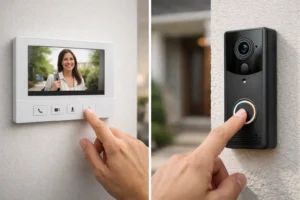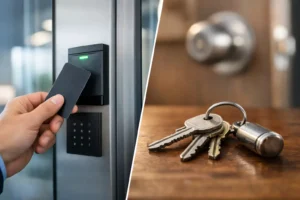

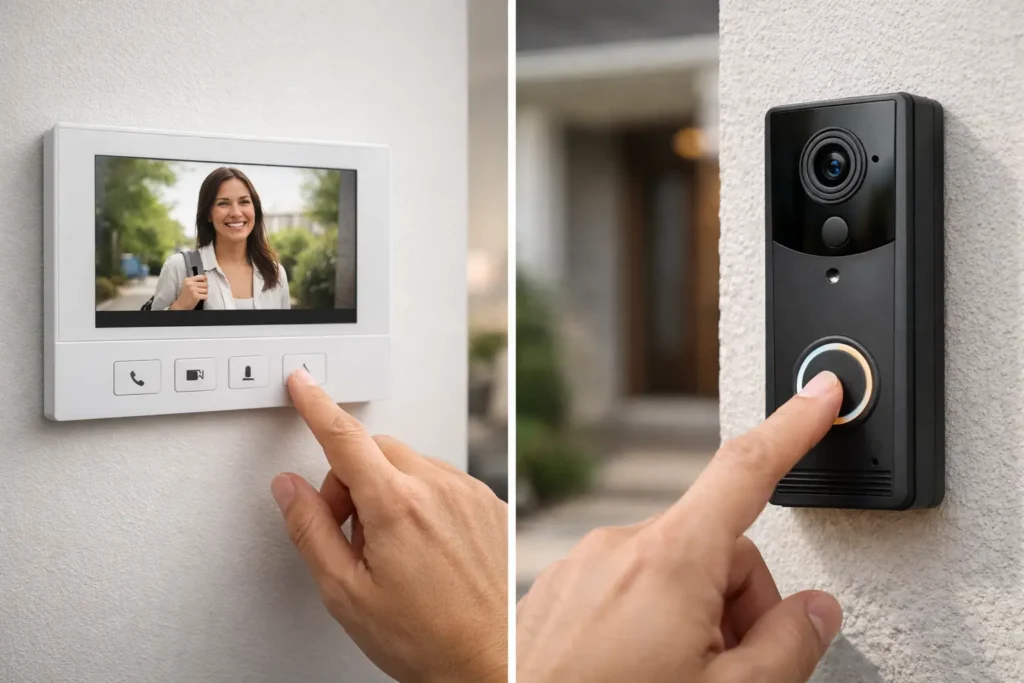
Someone rings the front entrance after dark. The question is not just who it is – it is what you want your system to do next. When comparing video intercom vs doorbell camera, the biggest difference is that one is mainly built to help you see and speak to visitors, while the other can also become part of how you control access to the property.
That distinction matters for homeowners, condo managers, office operators, and retail businesses alike. A front door device can look similar on the wall, but the right choice depends on traffic flow, entry points, security expectations, wiring options, and whether you need a convenience tool or a real access management system.
Video intercom vs doorbell camera: the core difference
A doorbell camera is usually designed for single-entry convenience. It lets you see who is at the door, receive motion alerts, and talk through a mobile app or indoor chime setup. For many homes, that covers the basics.
A video intercom is typically a more structured entry solution. It combines video communication with door release functions, indoor stations, gate control, or integration with access control systems. In other words, it does more than notify you that someone is outside. It helps manage whether they get in.
This is why the comparison can be misleading if you only look at image quality or app features. The better question is what level of control your property needs.
Where a doorbell camera makes sense
For a detached home with one main front door, a doorbell camera can be a practical fit. It gives the homeowner visibility, package monitoring, and basic visitor communication without turning the entrance into a larger security project.
It also works well for people who want quick awareness rather than full entry management. If your main goal is to check deliveries, screen unexpected visitors, and get motion notifications on your phone, a doorbell camera often does the job at a lower upfront cost.
That said, there are limits. Most doorbell cameras are app-first devices. They depend heavily on Wi-Fi stability, cloud settings, subscription features, and battery maintenance in some models. If the network is weak at the front entry, the user experience can go downhill fast. Delayed notifications and dropped video calls are frustrating when the whole point is instant response.
When a video intercom is the better choice
A video intercom is usually the stronger option when the entrance is more than a simple front step. That includes gated homes, multi-tenant buildings, side entrances, offices with controlled access, warehouses, medical clinics, and commercial sites where staff need to verify visitors before granting entry.
The value is not just communication. It is controlled entry with more reliability and structure. A properly installed video intercom can connect to electric strikes, magnetic locks, gates, indoor monitors, and broader access systems. Staff or residents can identify a visitor and unlock the entrance from a secure point instead of physically walking to the door.
For business owners, that can reduce interruptions and tighten control over who enters the premises. For property managers, it can improve daily convenience while creating a more professional and secure visitor process. For homeowners with gates or long driveways, it solves a problem a standard doorbell camera often cannot handle well.
Security depth is not the same thing as convenience
One of the biggest mistakes buyers make is assuming these products are interchangeable because both have cameras and two-way audio. They are not.
A doorbell camera is often a convenience-centered security device. It records activity, sends alerts, and lets you speak remotely. That has value, especially for porch security and casual visitor screening.
A video intercom is usually part of a deeper physical security setup. It is more likely to support structured entry workflows, hardwired reliability, and integration with locks, gates, and commercial-grade equipment. If your concern is unauthorized access rather than just awareness, the intercom category is usually stronger.
This does not mean every property needs the more advanced option. It means the stakes should guide the choice. Watching a package delivery is one thing. Securing a medical office entrance or managing after-hours access at a warehouse is another.
Installation differences matter more than most people expect
On paper, a doorbell camera can look easier and cheaper. In many cases, it is. Some units are battery-powered, some use existing doorbell wiring, and many are marketed as simple DIY devices.
But easy setup is not always the same as dependable performance. Battery models need upkeep. Wi-Fi signal strength at the front exterior is often weaker than people assume. Existing doorbell transformers may not be compatible. Cold weather, heavy use, or poor placement can create ongoing issues.
A video intercom usually involves more planning at the start, especially if it will control locks or gates. That can include low-voltage wiring, power requirements, indoor monitor placement, network configuration, and integration with door hardware. The payoff is that the system is typically more stable, more scalable, and better suited for properties where reliability matters every day.
For larger homes and commercial locations, professional installation is usually the difference between a device that works most of the time and a system that works when it counts.
Video intercom vs doorbell camera for homes
For many homeowners, the right answer comes down to entry complexity. If you live in a single-family home and want alerts, video clips, and two-way talk at the front porch, a doorbell camera may be enough.
If your home has a gate, detached garage entry, long driveway, or a need to release access remotely, a video intercom starts to make more sense. The same applies if you want indoor monitors so family members can answer without using a phone.
There is also a quality-of-life factor. Some homeowners prefer a system designed around the property itself, not just around a mobile app. A dedicated intercom station can be easier for children, older adults, and anyone who does not want every visitor interaction routed through a smartphone.
Video intercom vs doorbell camera for businesses
Businesses usually outgrow consumer-style doorbell cameras quickly. A retail store with a back entrance, a warehouse receiving area, or an office with controlled access has different needs than a single front porch.
A doorbell camera can still help at a low-risk entrance or small office suite, especially where the goal is simple visitor awareness. But once you need to manage employee access, unlock doors remotely, connect multiple entry points, or support reception and after-hours procedures, a video intercom is often the more practical investment.
This is especially true in busy environments where delays cost time. Staff should not have to rely on one person noticing a phone alert before granting entry to a delivery driver or client. A proper intercom system creates a clearer process.
Cost is not just about the device price
Doorbell cameras usually win on entry-level pricing. The hardware cost is lower, and installation can be lighter. For a small home with basic needs, that may be the smartest use of budget.
Video intercoms tend to cost more because they do more. The equipment is often more specialized, and installation can involve door hardware, wiring, monitors, and system programming. But comparing only purchase price misses the bigger picture.
If you choose a low-cost device for a property that actually needs access control, you may end up replacing it later. That is where a proper site assessment matters. The cheaper option is only cheaper if it truly fits the job.
Which system is right for you?
If your priority is simple visitor video, package awareness, and app-based alerts at one residential door, a doorbell camera is often the right fit. If your priority is secure entry management, remote door release, gate control, or a more professional setup for a home or business, a video intercom is usually the better long-term choice.
There are also cases where both belong on the same property. A business might use a video intercom at the main controlled entrance and standard cameras elsewhere for broader coverage. A larger home may want an intercom at the gate and surveillance at the front porch and perimeter.
The best systems are designed around how the property actually works. That is why professionally planned security usually performs better than piecing together devices one by one. For owners in places like Delta and the Lower Mainland, where properties range from compact homes to warehouses and mixed-use buildings, that difference shows up quickly in daily use.
The right front-entry system should make life easier the moment someone arrives at the door, not create one more alert to ignore.