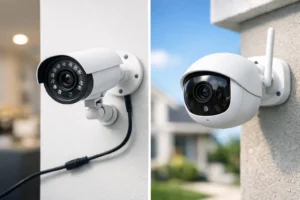

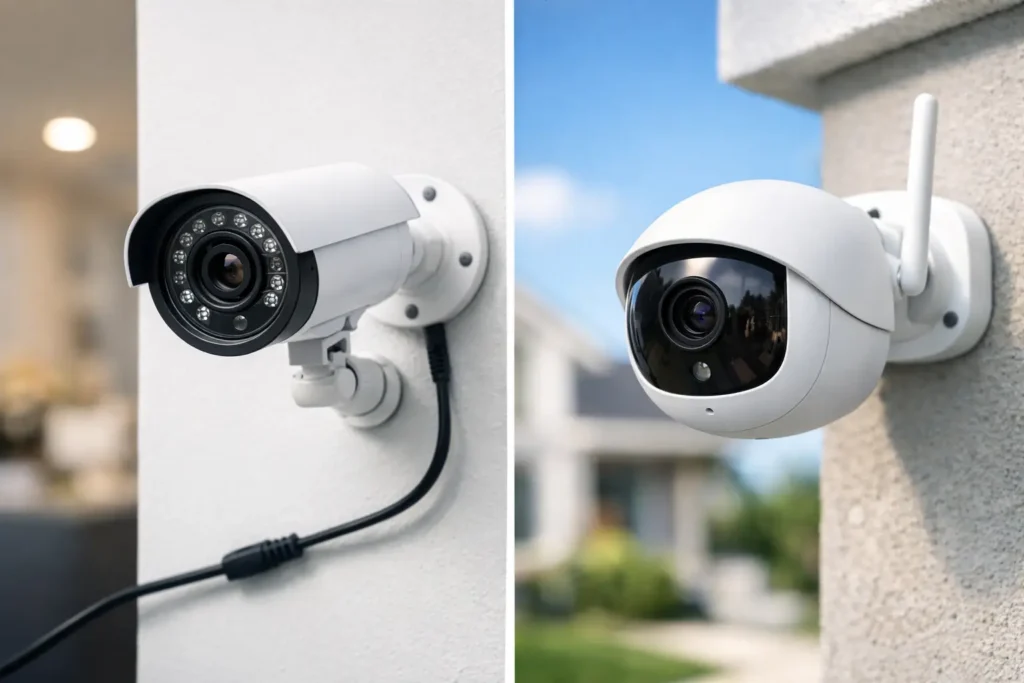
A camera mounted over a front door, loading bay, or cash counter is only useful when it records the moment you need it. That is why the choice between wired cameras vs wireless cameras should not come down to what is easiest to buy online. It should come down to coverage, building layout, network reliability, power availability, and how much you depend on the footage.
For many homes, a wireless camera is a practical starting point. For businesses, multi-unit properties, and locations that need dependable 24/7 recording, a professionally installed wired system is often the stronger long-term investment. Neither option is automatically right for every property.
Wired Cameras vs Wireless Cameras: The Core Difference
A wired security camera sends video through a physical cable, typically Ethernet cable, to a network video recorder (NVR), switch, or recording system. Many professional systems use Power over Ethernet, known as PoE. One cable provides both power and a stable data connection, eliminating the need for a nearby electrical outlet or regular battery changes.
A wireless camera sends video through Wi-Fi to a recorder, cloud service, or mobile app. Some wireless models are plugged into power, while others use rechargeable batteries or solar panels. “Wireless” usually describes the video connection, not necessarily the power source.
That distinction matters. A plug-in Wi-Fi camera may be convenient, but it still relies on a strong wireless signal and consistent internet or local network performance. A battery-powered camera adds another variable: someone must keep it charged.
When Wired Cameras Are the Better Choice
Wired cameras are built for properties where reliability is the first priority. They are especially effective for retail stores, warehouses, restaurants, medical offices, industrial sites, apartment buildings, and larger homes with several exterior access points.
Because video travels over cable, wired cameras are less affected by Wi-Fi congestion, changing signal strength, and interference from neighboring networks. They can continuously record high-resolution footage to an NVR without competing with phones, streaming devices, smart TVs, and other connected equipment.
This makes a significant difference when you need clear evidence. A system that records continuously is more likely to capture the full sequence around an incident, rather than only a short motion-triggered clip. For businesses, this can help with theft investigations, liability concerns, employee safety, deliveries, and after-hours activity.
Benefits of a Professional Wired System
A properly designed wired camera system offers several operational advantages:
- Consistent video transmission and continuous recording
- PoE power and data through a single protected cable
- Better scalability for multiple cameras and larger properties
- Less dependence on Wi-Fi performance and cloud subscriptions
- Centralized recording that can remain on-site under your control
Wired systems also support more advanced camera placement. Cameras can be installed at perimeter gates, detached garages, parking areas, hallways, storage rooms, and building entrances without relying on whether a Wi-Fi signal reaches the location. The cable run takes planning, but the finished system is usually cleaner, more stable, and easier to manage over time.
The trade-off is installation. Running cable through walls, ceilings, crawlspaces, or commercial conduits takes more time than mounting a battery camera. It is work worth doing properly. Poor cable routing, exposed connections, and incorrectly positioned cameras can reduce the value of even premium equipment.
When Wireless Cameras Make Sense
Wireless cameras are a strong option when cable installation is difficult, temporary, or unnecessary. They work well for renters, small condos, a single front entry, a backyard shed, or a location where the camera may need to be moved later.
For homeowners who want motion alerts and live mobile viewing without major construction, a quality Wi-Fi camera can deliver useful protection quickly. Wireless systems can also complement a wired installation. For example, a wired system may cover the main entrances, driveway, and interior areas, while a wireless camera monitors a temporary construction area or an outbuilding where cabling is not practical.
Battery-powered cameras are particularly flexible, but they require realistic expectations. Frequent motion activity, cold weather, high video quality settings, and poor Wi-Fi signals can shorten battery life. A camera that sends dozens of alerts each day will need more attention than one monitoring a quiet side gate.
Wireless Camera Limitations to Plan For
Wireless cameras depend on the network around them. If the Wi-Fi signal is weak at the installation point, video may load slowly, motion clips may be delayed, or the camera may disconnect. Thick concrete walls, metal siding, distance from the router, and crowded wireless networks can all affect performance.
Internet outages are another consideration. Some cameras can still record locally during an outage, but others rely heavily on cloud storage. Before choosing a wireless system, confirm where footage is stored, how long it is retained, whether a subscription is required, and what continues working if internet service drops.
For a business owner, these details are not minor. A camera that misses activity at a rear delivery door because the signal is unstable creates a false sense of security. Network design should be part of the security plan, not an afterthought.
Compare Reliability, Cost, and Maintenance
The upfront price of a wireless camera is often lower, especially for one or two cameras. The long-term cost can change once cloud storage subscriptions, replacement batteries, chargers, Wi-Fi upgrades, and additional devices are considered.
A wired system typically requires a higher initial investment because of cable runs, professional labor, an NVR, and network equipment. However, it can offer lower ongoing costs, centralized storage, and easier expansion for properties that need more cameras later.
| Factor | Wired Cameras | Wireless Cameras | | — | — | — | | Video connection | Physical cable | Wi-Fi network | | Power | Usually PoE through Ethernet | Battery, solar, or nearby outlet | | Recording | Continuous local recording is common | Often motion-based or cloud-based | | Best fit | Larger, permanent, high-priority coverage | Small, flexible, or hard-to-wire areas | | Main concern | Installation complexity | Wi-Fi, power, and subscription dependence |
Maintenance follows the same pattern. Wired cameras still need lens cleaning, system health checks, firmware updates, and occasional adjustments. But they do not usually need routine charging. Wireless cameras need those same checks, plus battery management and verification that Wi-Fi coverage remains strong after router changes or network upgrades.
Your Network Can Decide the Outcome
Camera performance is closely tied to network design. This is especially true with wireless systems, but wired IP cameras also need the right switch capacity, cable quality, recorder storage, and secure configuration.
A home with unreliable Wi-Fi may not need fewer cameras. It may need better access point placement, structured cabling, or a properly configured mesh network. A commercial property may need a dedicated security network that keeps camera traffic separate from guest Wi-Fi, point-of-sale systems, and office devices.
This is where a site assessment adds value. The right installer looks beyond camera specifications and evaluates sightlines, lighting, entry points, mounting height, cable routes, network load, retention requirements, and future expansion. A camera aimed too high or placed directly into glare will not provide useful identification, whether it is wired or wireless.
How to Choose the Right System for Your Property
Choose wired cameras when you need dependable continuous coverage, multiple cameras, high-quality evidence, and a system that will remain in place for years. They are usually the best answer for commercial security, perimeter monitoring, larger homes, and any site where a missed recording could have serious consequences.
Choose wireless cameras when flexibility matters most, the coverage area is limited, or running cable would be disruptive or impractical. They can be effective for targeted monitoring, provided the Wi-Fi signal, power source, and recording plan are tested before relying on them.
Many properties benefit from a hybrid approach. A wired NVR system can protect the critical areas, while select wireless devices extend visibility to temporary, remote, or difficult-to-cable locations. This avoids forcing one technology to do every job.
For homeowners and business operators across the Lower Mainland, HTech Knight Security Systems Ltd can assess the property, recommend the right camera layout, and install a system designed for reliable day-to-day use. The best camera system is not the one with the longest feature list. It is the one that gives you clear coverage when the property is quiet, the lights are low, and nobody is there to watch.