
A security alarm rarely fails at a convenient time. It may start beeping after closing time, show a communication error while you are away, or refuse to arm just when your family or business needs protection. Fast Abbotsford emergency alarm repair is about more than stopping an annoying sound. It is about restoring reliable detection, monitoring communication, and confidence that your property is protected.
For homeowners, a malfunctioning alarm can leave doors, windows, garages, and secondary entry points exposed. For a retail store, warehouse, restaurant, or medical office, it can interrupt operations, trigger false dispatches, and create an avoidable security gap. The right response depends on the fault, but waiting to see whether it clears on its own is rarely the best plan.
When an Alarm Problem Needs Emergency Service
Not every trouble message requires an after-hours callout. A low battery warning, for example, may allow time for scheduled service if the system is otherwise armed, communicating, and operating normally. An active siren, a system that will not arm, a lost monitoring connection, or repeated false alarms deserves faster attention.
Emergency repair is especially appropriate when the system has stopped protecting a critical area, when a break-in or attempted entry may have damaged equipment, or when an alarm panel displays a communication failure. A panel may still appear powered on while being unable to send an alarm to the monitoring center. That difference matters. Lights on the keypad do not guarantee that the system can call for help.
Commercial properties should treat alarm faults with added urgency when they affect a cash office, inventory area, controlled entrance, server room, or any space with restricted access. A temporary workaround may be possible in some cases, but it should be a deliberate risk decision made with a security professional, not an assumption that the system is fine.
What to Do Before the Technician Arrives
Start by confirming whether there is an actual emergency. If you hear an alarm and see signs of forced entry, do not enter the property. Move to a safe location and contact emergency services. If your system is professionally monitored, notify the monitoring provider that you are safe and provide any requested verification information.
If there is no immediate danger, look at the alarm keypad or app for the exact message. Terms such as “low battery,” “zone fault,” “tamper,” “AC loss,” “cellular trouble,” or “communication failure” give a technician a useful starting point. Note whether the issue began after a power outage, a renovation, new internet service, a storm, or work near a door, window, or alarm device.
Do not disconnect the panel, cut wires, or repeatedly reset the system without instruction. That can erase useful fault information, create more trouble conditions, or disconnect monitoring. If a detector is chirping or a keypad is beeping, use the authorized silence function if you know it, then arrange service. Silencing an alert is not the same as correcting the cause.
For a business, assign one person to communicate with the technician and keep access to the panel, electrical room, and affected areas available. This reduces delays during an after-hours repair visit. If the issue affects a monitored alarm, make sure the person on site has the account details or authorized passcode needed to place the system on test.
Common Causes of Alarm Failures
Backup Battery and Power Problems
Most intrusion alarm panels use a backup battery so the system can operate during a short power outage. These batteries wear out over time. When the battery is weak, the keypad may beep, display a trouble condition, or fail to maintain proper operation during an outage.
Power problems are not always limited to the battery. A tripped breaker, loose transformer, damaged outlet, or electrical work can interrupt the main power supply. A trained technician checks both the incoming power and backup power, rather than replacing a battery and assuming the issue is solved.
Door, Window, and Motion Sensor Faults
Alarm sensors need precise alignment and secure mounting. A door contact can show open when a door is closed if the magnet shifts, the frame moves, or a wire becomes damaged. Motion detectors can also cause false alarms when their placement is affected by heat sources, insects, loose mounting, or changes to the room.
These issues often appear after renovations, moving furniture, replacing windows, or changing how a commercial space is used. A professional repair should identify why the zone fault occurred, test the device, and confirm that the panel recognizes the corrected condition.
Monitoring and Communication Errors
Older alarm systems may rely on a phone line, while many current systems use cellular or internet communication. A service change, router replacement, weak cellular signal, expired communicator service, or damaged connection can prevent alarm signals from reaching the monitoring center.
This is one of the most important reasons to request Abbotsford emergency alarm repair. A system that arms locally but cannot transmit events leaves a gap that may not be obvious until a real incident occurs. After a repair, the technician should verify communication with the monitoring station, not simply clear the error from the keypad.
Tamper Conditions and Equipment Damage
A tamper alert means a device cover, enclosure, siren, or panel has been opened, loosened, or disturbed. It may be caused by accidental contact, a failed component, pest damage, weather exposure, or an attempted intrusion. Treat unexplained tamper conditions seriously, especially at exterior equipment or in areas that are not routinely occupied.
What Professional Emergency Alarm Repair Should Include
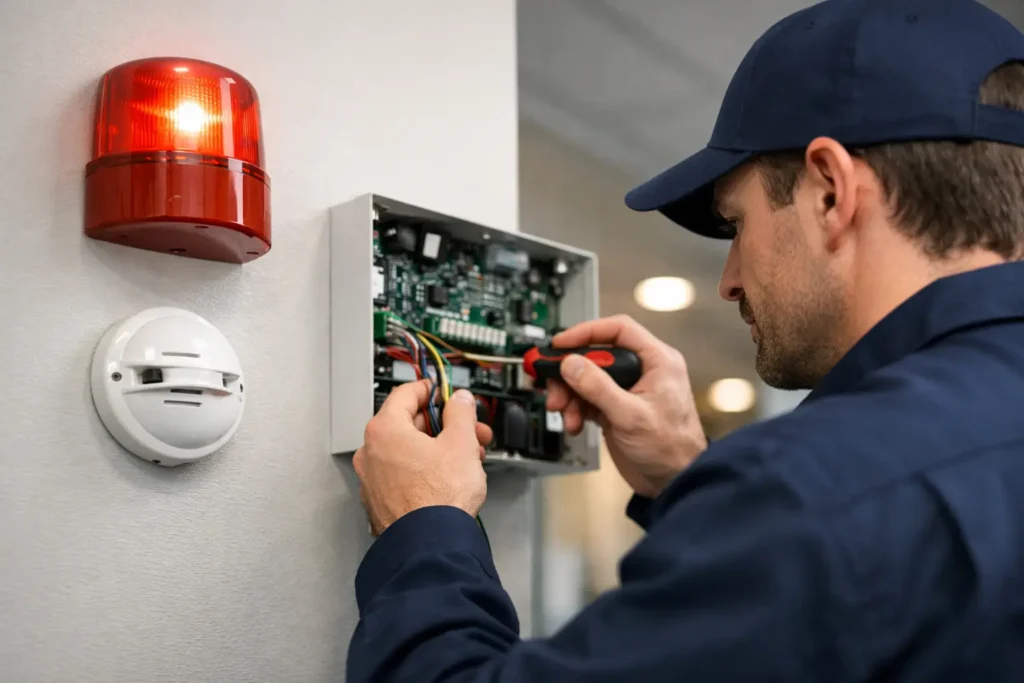
A dependable repair visit begins with diagnosis, not guesswork. The technician should inspect the panel history, identify the affected zone or communication path, test power levels, and examine the relevant devices. In a monitored system, testing should also confirm that alarm, restore, and trouble signals are received correctly.
The proper repair may be simple, such as replacing a battery, realigning a contact, or restoring power. Other calls reveal a larger issue: an outdated control panel, unsupported communicator, deteriorated wiring, insufficient cellular coverage, or equipment that no longer fits the property’s current layout.
This is where customized advice matters. Replacing one failing component may be the sensible, cost-effective choice for a newer system. For an older system with recurring failures, investing in a modern alarm panel with cellular communication, mobile app control, and integrated cameras or access control can reduce future service calls and improve visibility. The best option depends on the equipment condition, monitoring requirements, property size, and level of risk.
HTech Knight Security Systems Ltd provides emergency security support with a practical focus: restore the immediate protection issue first, then explain any repair or upgrade options clearly. Homeowners and business operators should never be pressured into replacing a system that can be safely and reliably repaired. At the same time, recurring faults should not be treated as normal operating costs.
Preventing the Next Alarm Emergency
A working security system benefits from routine attention. Test alarms and panic devices according to your monitoring provider’s instructions, replace batteries on schedule, and notify your security provider before changing internet, phone, electrical, or construction work that may affect equipment. Property managers should also review who has alarm codes and ensure staff know the correct opening and closing procedure.
For commercial sites, a maintenance agreement can be particularly valuable. Scheduled inspections catch weak batteries, damaged contacts, outdated communication equipment, and coverage gaps before they become an overnight problem. For homes, a periodic system health check is useful after a move, renovation, or smart-home upgrade.
An alarm system should be quiet when everything is normal and decisive when it is not. If your panel is beeping, refusing to arm, reporting a communication fault, or triggering false alarms, act before a small trouble condition becomes a real security exposure. Prompt professional service protects the equipment, the property, and the people who rely on it.